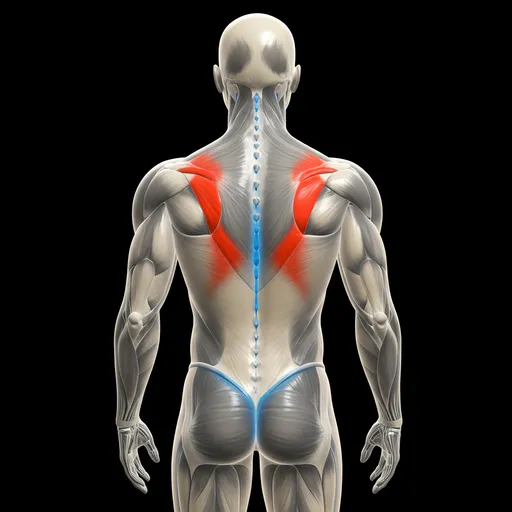
Which muscles does it train?
BackCalvesForearmsGlutesHamstringsLatsQuadricepsTraps
Equipment needed
How to perform it
For strength, 3 to 5 sets of 2 to 5 reps with 3 to 5 minutes of rest are common. For hypertrophy, use 3 to 4 sets of 6 to 10 reps with 2 to 3 minutes of rest.
Execution and technique cues
- Stand centered in the frame with feet hip-width apart and handles positioned at the sides of the hips. Push the hips back, bend the knees until you can grip the handles, flatten the back, and retract the shoulder blades.
- Build maximum intra-abdominal pressure, drive the floor away with the feet, and extend the hips and knees simultaneously to lift the frame. Keep the shoulders directly above or slightly in front of the handles throughout the pull.
- Reach full hip and knee extension at the top without hyperextending the lumbar spine. Hold the loaded position briefly before descending.
- Lower the frame under control by hinging the hips back and bending the knees until the frame contacts the floor. Reset your brace fully before initiating the next repetition.
Common mistakes
- Rounding the lower back off the floor because intra-abdominal pressure was not properly established before the pull begins.
- The hips rising first before the knees extend meaningfully, effectively turning the lift into a stiff-leg pull and overloading the lower back.
- Actively shrugging the shoulders at the top of the rep instead of holding a neutral position, creating unnecessary trap tension without adding value.
Frequently asked questions
- How does the frame deadlift differ from a conventional barbell deadlift?
- The handles sit at the sides of the body, similar to a trap bar deadlift, allowing a more upright torso angle and reducing shear stress on the lumbar spine compared to a straight-bar pull. The shorter range of motion to the handles also allows heavier loads to be handled with better positional control.
- Is the frame deadlift suitable for beginners?
- Yes. The neutral side-grip position is mechanically easier for most people to learn than a conventional barbell grip. Beginners should still start with moderate loads and focus on establishing solid bracing and a flat back position before adding weight.
Related exercises
Start free and track it
Log this exercise in Ironstead. Free forever for athletes, no auto-renew.
Start free and track itConnect with a coach
Train with a coach? Link up in Ironstead so they write your plans and follow your progress.
Connect with a coachWrite plans as a coach
Build plans with this exercise and assign them to your athletes. 30-day trial.
Write plans as a coach