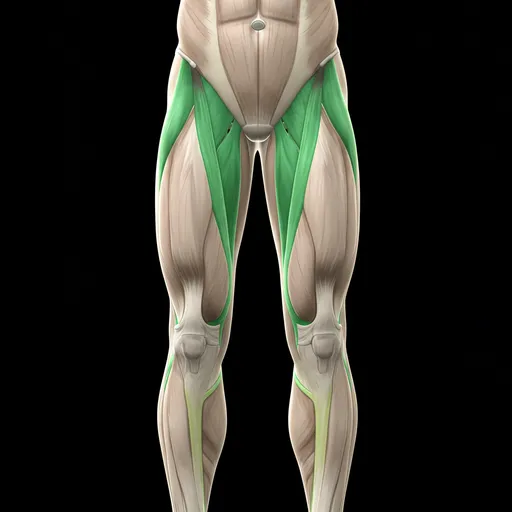
Which muscles does it train?
QuadricepsBackCalvesGlutesHamstrings
Equipment needed
How to perform it
For strength, 3 to 5 sets of 3 to 5 reps with 3 to 5 minutes of rest are common. For hypertrophy, use 3 to 4 sets of 6 to 12 reps with 2 to 3 minutes of rest.
Execution and technique cues
- Place the barbell high on your upper traps and grip the bar tightly to create a stable shelf.
- Set your feet shoulder-width apart with toes flared slightly and brace your core.
- Squat down by bending at the knees and hips simultaneously, keeping the torso as upright as possible.
- Drive through the mid-foot to stand back up to a fully extended position.
Common mistakes
- Allowing the chest to collapse forward, turning the squat into a good-morning.
- Allowing the knees to cave inward during the ascent.
- Lifting the heels off the floor at the bottom of the movement.
Frequently asked questions
- How deep should I squat during a high-bar squat?
- You should squat as deep as your mobility allows while maintaining a neutral spine, ideally with the hip crease passing below the top of the knees.
- What is the main difference between high-bar and low-bar squats?
- The high-bar squat places the bar higher on the traps, which requires a more upright torso and shifts more emphasis to the quadriceps.
Related exercises
Start free and track it
Log this exercise in Ironstead. Free forever for athletes, no auto-renew.
Start free and track itConnect with a coach
Train with a coach? Link up in Ironstead so they write your plans and follow your progress.
Connect with a coachWrite plans as a coach
Build plans with this exercise and assign them to your athletes. 30-day trial.
Write plans as a coach