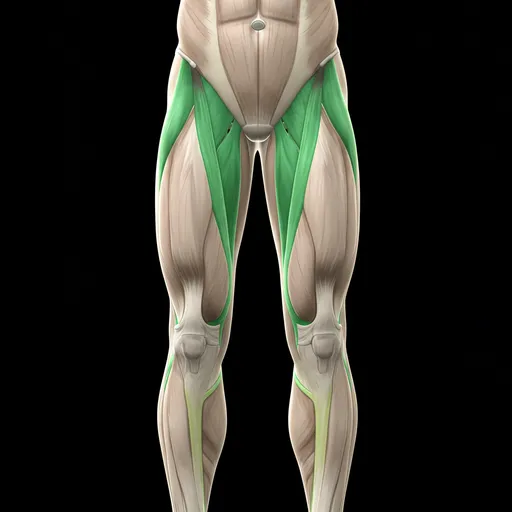
Which muscles does it train?
QuadricepsBackCalvesGlutesHamstrings
Equipment needed
How to perform it
For strength, 3 to 5 sets of 3 to 5 reps with 3 to 5 minutes of rest are common. For hypertrophy, use 3 to 4 sets of 6 to 12 reps with 2 to 3 minutes of rest.
Execution and technique cues
- Place the barbell across the rear deltoids below the spine of the scapula and grip the bar firmly.
- Step back, set the feet slightly wider than shoulder-width, and take a deep breath to brace the core.
- Hinge the hips backward and bend the knees to descend until the hip crease is below the top of the knees.
- Drive the hips straight up while pressing the feet into the floor to return to the starting position.
Common mistakes
- Allowing the knees to cave inward during the ascent.
- Letting the chest collapse forward, turning the squat into a good morning exercise.
- Placing the bar too high on the neck while attempting a low-bar torso lean.
Frequently asked questions
- Why choose the low-bar squat over the high-bar squat?
- The low-bar squat allows most lifters to handle heavier loads because it shortens the moment arm of the lower back and increases glute and hamstring involvement.
- How wide should my grip be on the bar?
- Your grip should be as narrow as your shoulder mobility allows in order to keep the upper back tight and support the bar securely.
Related exercises
Start free and track it
Log this exercise in Ironstead. Free forever for athletes, no auto-renew.
Start free and track itConnect with a coach
Train with a coach? Link up in Ironstead so they write your plans and follow your progress.
Connect with a coachWrite plans as a coach
Build plans with this exercise and assign them to your athletes. 30-day trial.
Write plans as a coach