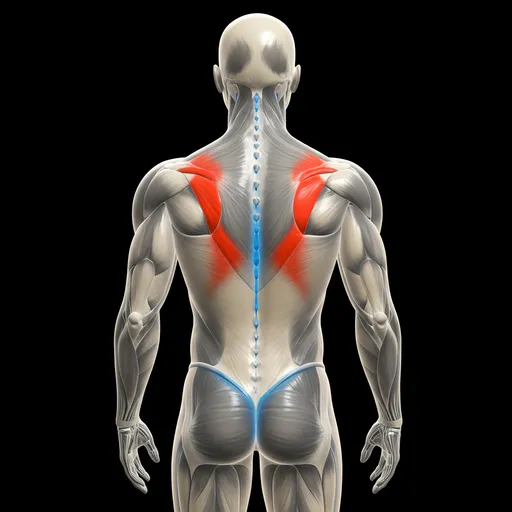
Which muscles does it train?
BackForearmsGlutesHamstringsQuadricepsTraps
Equipment needed
How to perform it
For strength, 3 to 5 sets of 2 to 5 reps with 3 to 5 minutes of rest are common. For hypertrophy, use 3 to 4 sets of 6 to 10 reps with 2 to 3 minutes of rest.
Execution and technique cues
- Set your feet hip-width apart and grip the barbell with an extra-wide stance so that the bar sits in the crease of your hips when standing tall.
- Pull your hips down and chest up, engaging your lats to keep the bar close to your shins before you start the pull.
- Push through the floor with your legs to initiate the lift, maintaining a constant torso angle until the bar passes your knees.
- Drive your hips forward to lock out the weight, standing tall with your shoulders pulled back and down.
Common mistakes
- Rounding the upper back due to the wide grip, which prevents proper lat engagement and spine alignment.
- Letting the barbell drift forward away from the shins, increasing stress on the lower back.
- Initiating the pull by jerking the bar off the floor instead of building tension and pushing through the feet.
Frequently asked questions
- What is the primary benefit of a snatch-grip deadlift compared to a conventional deadlift?
- The wider grip increases the range of motion and demands greater activation of the upper back, traps, and hamstrings.
- Should I use straps for the snatch-grip deadlift?
- Using straps is highly recommended because the wide grip makes holding the bar significantly more difficult for the forearms and grip strength.
Related exercises
Start free and track it
Log this exercise in Ironstead. Free forever for athletes, no auto-renew.
Start free and track itConnect with a coach
Train with a coach? Link up in Ironstead so they write your plans and follow your progress.
Connect with a coachWrite plans as a coach
Build plans with this exercise and assign them to your athletes. 30-day trial.
Write plans as a coach