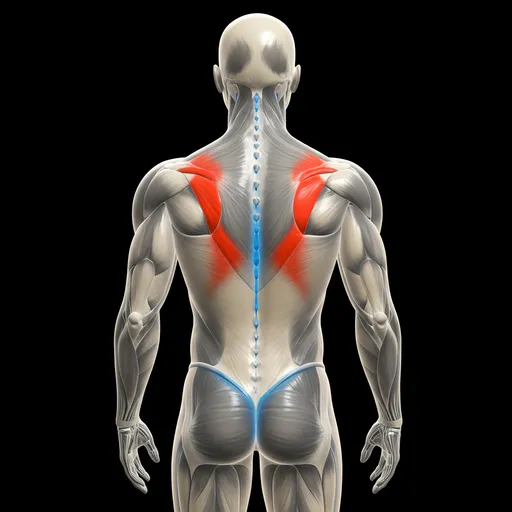
Which muscles does it train?
BackForearmsGlutesQuadricepsTraps
Equipment needed
How to perform it
For strength, 3 to 5 sets of 2 to 5 reps with 3 to 5 minutes of rest are common. For hypertrophy, use 3 to 4 sets of 6 to 10 reps with 2 to 3 minutes of rest.
Execution and technique cues
- Set a very wide stance with the toes pointed outward, positioning the shins close to the barbell.
- Hinge at the hips, grip the bar directly under the shoulders, and pull the shoulder blades down to tension the bar.
- Push the floor away through the heels while keeping the chest up and the hips close to the bar.
- Stand tall at lockout by squeezing the glutes and pushing the hips forward, avoiding any backward leaning.
Common mistakes
- Letting the knees collapse inward during the pull instead of forcing them out over the toes.
- Starting with the hips too low in a squat position, which pushes the barbell forward.
- Allowing the upper back to round excessively and letting the bar drift away from the shins.
Frequently asked questions
- What are the main biomechanical advantages of the Sumo Deadlift over the Conventional Deadlift?
- It reduces the demand on the lower back due to a more upright torso and shortens the vertical distance the bar must travel.
- Is the Sumo Deadlift suitable for lifters with long legs?
- Yes, lifters with longer femurs often find the sumo stance comfortable as it reduces the hip-to-bar moment arm and allows a more upright posture.
Related exercises
Start free and track it
Log this exercise in Ironstead. Free forever for athletes, no auto-renew.
Start free and track itConnect with a coach
Train with a coach? Link up in Ironstead so they write your plans and follow your progress.
Connect with a coachWrite plans as a coach
Build plans with this exercise and assign them to your athletes. 30-day trial.
Write plans as a coach