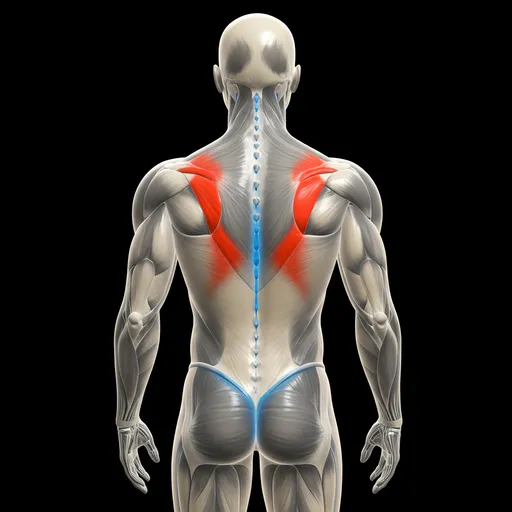
Which muscles does it train?
BackAbsBicepsCalvesForearmsGlutesHamstringsQuadricepsTraps
Equipment needed
How to perform it
For strength, 3 to 5 sets of 4 to 6 reps with 2 to 3 minutes of rest are common. For hypertrophy, use 3 to 4 sets of 8 to 12 reps with 60 to 90 seconds of rest.
Execution and technique cues
- Stand hip-width behind the stone, hinge at the hips and knees, and wrap both arms as low around the stone as possible with your palms pressed underneath and your chest leaning into it.
- Drive through the legs and hips to lift the stone, rolling it up your body and using your abdomen as a shelf to rest the stone once it reaches hip height.
- Lean back slightly and explosively extend the hips to drive the stone upward and over the bar, generating the momentum from hip drive rather than lower back extension.
- Release the stone and step back immediately so the stone clears the bar cleanly and does not rebound back toward you on landing.
Common mistakes
- Gripping the stone too high on the initial pick, creating a long lever that causes the stone to tip forward and break contact with the body during the lift.
- Extending the hips before the stone has been rolled to stomach or hip height, which prevents the over-the-lap position and places excessive shear on the lower back.
- Looking down when driving the stone over the bar instead of keeping the gaze level or slightly upward, which disrupts neutral spinal alignment at the most demanding point.
Frequently asked questions
- Should I use tacky or chalk for Atlas Stone Over Bar?
- Tacky provides significantly better adhesion to smooth concrete or resin stones and is standard in competition. Chalk offers less grip on smooth surfaces but is adequate for training with rough-surfaced stones.
- How high should the bar be set for training?
- A good starting height for learning technique is approximately navel height, which allows you to practice the roll and extension without the bar being the limiting factor. Competition heights typically range from hip to shoulder height depending on the event.
Related exercises
Start free and track it
Log this exercise in Ironstead. Free forever for athletes, no auto-renew.
Start free and track itConnect with a coach
Train with a coach? Link up in Ironstead so they write your plans and follow your progress.
Connect with a coachWrite plans as a coach
Build plans with this exercise and assign them to your athletes. 30-day trial.
Write plans as a coach