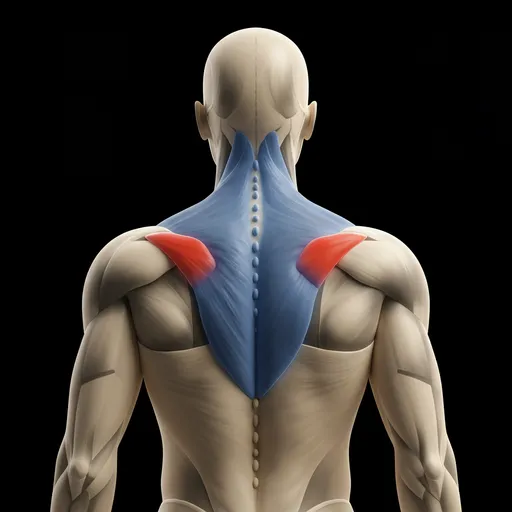
Which muscles does it train?
TrapsBackBicepsShoulders
Equipment needed
How to perform it
For strength, 3 to 5 sets of 4 to 6 reps with 2 to 3 minutes of rest are common. For hypertrophy, use 3 to 4 sets of 8 to 12 reps with 60 to 90 seconds of rest.
Execution and technique cues
- Set the cable pulley to the lowest position and grip the straight bar or rope attachment with a shoulder-width or slightly narrower overhand grip, standing upright with arms extended and the bar resting in front of the thighs.
- Pull the bar straight up along the body by driving the elbows up and out to the sides, keeping the elbows above the wrists and the bar close to the torso throughout.
- Stop the pull at chin height or just below, avoiding any pulling above shoulder level to reduce the risk of shoulder impingement.
- Lower the bar in a controlled manner back to the starting position until the arms are nearly extended, keeping the torso upright and the core braced throughout.
Common mistakes
- Using too narrow a grip and pulling the elbows excessively high, which places the shoulder joint in an impingement-prone position.
- Leaning back or using a torso swing to generate momentum, reducing the isolation of the traps, upper back, and shoulders.
- Letting the bar drift forward away from the body during the pull, which worsens lever mechanics and puts unnecessary stress on the shoulder joints.
Frequently asked questions
- Is the cable upright row safe for the shoulders?
- With proper technique, a shoulder-width or slightly wider grip, and pulling only to chin height, the cable upright row is well tolerated by most people. A very narrow grip combined with pulling above shoulder level significantly increases the risk of subacromial impingement. Anyone with existing shoulder issues should seek medical advice before including this exercise.
- Is a straight bar or a rope attachment better for the cable upright row?
- The rope allows a more neutral wrist position and a naturally wider grip, which many find more comfortable for the shoulders. The straight bar provides more stability and is practical when using heavier loads. Both effectively train the target muscles.
Related exercises
Start free and track it
Log this exercise in Ironstead. Free forever for athletes, no auto-renew.
Start free and track itConnect with a coach
Train with a coach? Link up in Ironstead so they write your plans and follow your progress.
Connect with a coachWrite plans as a coach
Build plans with this exercise and assign them to your athletes. 30-day trial.
Write plans as a coach