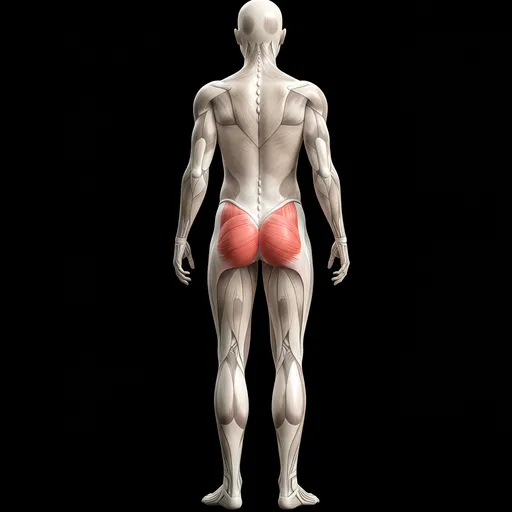
Which muscles does it train?
Glutes
Equipment needed
How to perform it
Isolation work is usually trained in a higher rep range: 2 to 4 sets of 10 to 15 reps with 45 to 90 seconds of rest, performed under control.
Execution and technique cues
- Set up on all fours with wrists directly under shoulders, knees under hips, spine neutral, and core lightly braced.
- Lift the right knee out to the side and upward until the thigh is roughly parallel to the floor, keeping the pelvis level throughout.
- Drive the movement through hip abduction using the glutes, not momentum, and maintain the 90-degree knee bend the entire time.
- Lower the knee slowly back to the start without fully resting it on the floor, then repeat all reps on that side before switching.
Common mistakes
- Allowing the pelvis to rotate toward the opposite side during the lift, which reduces glute activation and shifts stress to the lower back.
- Using momentum to swing the leg higher instead of genuine hip abduction strength, reducing stimulus to the target muscle.
- Losing core tension and letting the lower back sag or round during the repetitions.
Frequently asked questions
- Can I add extra resistance to the fire hydrant?
- Yes. A resistance band just above the knees or an ankle weight placed on the thigh effectively increases the load without compromising technique, provided you can still keep the pelvis stable.
- What exactly does the fire hydrant train?
- The fire hydrant primarily targets the gluteus medius and gluteus minimus through hip abduction, with additional gluteus maximus involvement from the combined external rotation and abduction pattern.
Related exercises
Start free and track it
Log this exercise in Ironstead. Free forever for athletes, no auto-renew.
Start free and track itConnect with a coach
Train with a coach? Link up in Ironstead so they write your plans and follow your progress.
Connect with a coachWrite plans as a coach
Build plans with this exercise and assign them to your athletes. 30-day trial.
Write plans as a coach