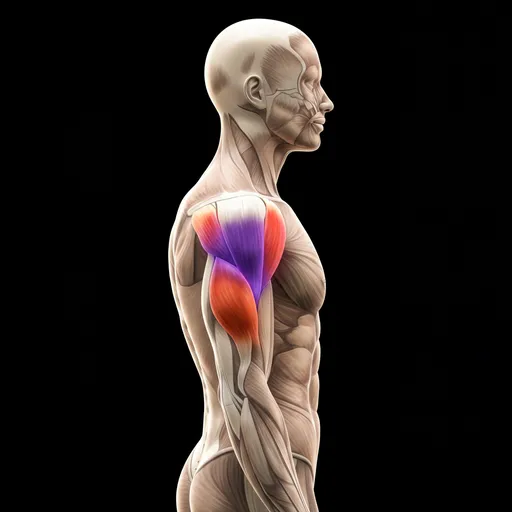
Which muscles does it train?
Triceps
Equipment needed
How to perform it
Isolation work is usually trained in a higher rep range: 2 to 4 sets of 10 to 15 reps with 45 to 90 seconds of rest, performed under control.
Execution and technique cues
- Sit on a bench with back support, hold a dumbbell with both hands under the inner plate, and lift it overhead.
- Keep the chest up, brace the core, and tuck the elbows close to the ears to point forward.
- Lower the dumbbell slowly behind the head by bending the elbows until the forearms touch the biceps.
- Press the dumbbell back up to the starting position by extending the elbows, squeezing the triceps at the top.
Common mistakes
- Letting the elbows flare out to the sides, which increases stress on the elbow joint and reduces triceps activation.
- Arching the lower back excessively to gain leverage, especially when lifting a weight that is too heavy.
- Cutting the range of motion short at the bottom instead of lowering the dumbbell to get a full stretch.
Frequently asked questions
- Is it better to perform the dumbbell overhead tricep extension seated or standing?
- Seated is generally better for isolation as it supports the spine and prevents you from using leg drive or excessive lower back arching.
- How should I grip the dumbbell during this exercise?
- Form a diamond shape with your hands and press your palms flat against the underside of the top weight plate.
Related exercises
Start free and track it
Log this exercise in Ironstead. Free forever for athletes, no auto-renew.
Start free and track itConnect with a coach
Train with a coach? Link up in Ironstead so they write your plans and follow your progress.
Connect with a coachWrite plans as a coach
Build plans with this exercise and assign them to your athletes. 30-day trial.
Write plans as a coach