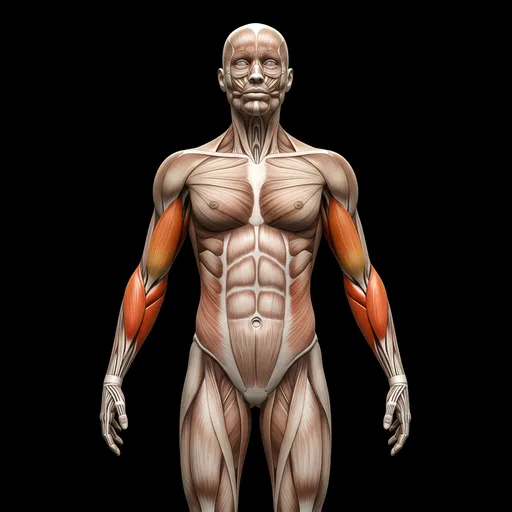
Which muscles does it train?
Forearms
Equipment needed
How to perform it
Isolation work is usually trained in a higher rep range: 2 to 4 sets of 10 to 15 reps with 45 to 90 seconds of rest, performed under control.
Execution and technique cues
- Sit on a bench, grab a barbell with an underhand grip, and rest your forearms on your thighs with your wrists hanging over your knees.
- Allow the barbell to roll down to the tips of your fingers while keeping your forearms securely flat on your thighs.
- Curl the bar upward by flexing your wrists and squeezing your forearms, bringing the weight as high as possible.
- Lower the barbell slowly back to the starting finger-roll position to maintain tension in the forearms throughout the set.
Common mistakes
- Lifting the elbows or forearms off the thighs to help move the weight, which reduces isolation of the forearms.
- Using a range of motion that is too small and not allowing the bar to roll down into the fingers.
- Using excessive weight that forces you to use momentum or jerking movements to lift the barbell.
Frequently asked questions
- Should I let the barbell roll all the way into my fingertips?
- Yes, letting the bar roll into your fingertips at the bottom of the movement maximizes the range of motion and recruits the finger flexors.
- Is a barbell or dumbbell better for wrist curls?
- A barbell is excellent for progressive overload, while dumbbells allow for unilateral training and can be more comfortable for the wrists.
Related exercises
Start free and track it
Log this exercise in Ironstead. Free forever for athletes, no auto-renew.
Start free and track itConnect with a coach
Train with a coach? Link up in Ironstead so they write your plans and follow your progress.
Connect with a coachWrite plans as a coach
Build plans with this exercise and assign them to your athletes. 30-day trial.
Write plans as a coach