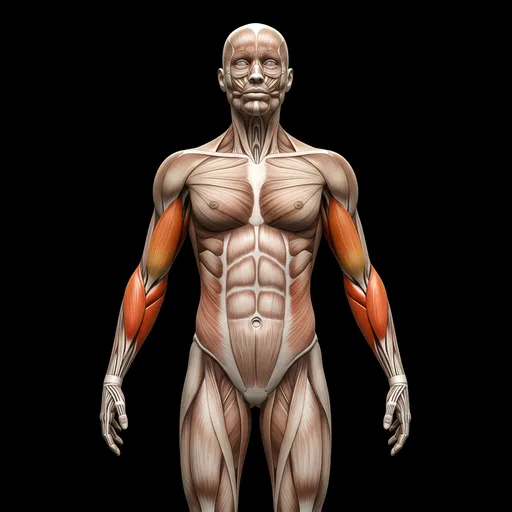
Which muscles does it train?
ForearmsShoulders
Equipment needed
How to perform it
Isolation work is usually trained in a higher rep range: 2 to 4 sets of 10 to 15 reps with 45 to 90 seconds of rest, performed under control.
Execution and technique cues
- Stand upright, grasp the wrist roller handle with an overhand grip, and extend your arms directly in front of your body at shoulder height.
- Begin with the weight fully lowered and your wrists in a neutral position, keeping your shoulders packed.
- Roll the handle toward you by alternating wrist extension, winding the rope up until the weight reaches the top.
- Reverse the motion under control, slowly rolling the weight back down rather than letting it drop.
Common mistakes
- Allowing the arms to sag downward instead of keeping them extended at shoulder height, which reduces shoulder endurance demand.
- Letting the rope slide or unspool quickly without resistance during the descent phase of the exercise.
- Using excessive body sway or trunk movement to help roll the weight up instead of isolating the wrists.
Frequently asked questions
- Should I roll the weight up using extension or flexion?
- You can do both; rolling the rope up with wrist extension targets the forearm extensors, while rolling it up with wrist flexion targets the flexors.
- My shoulders tire out before my forearms, how can I fix this?
- You can rest your forearms on a power rack safety pin at shoulder height to support the weight of your arms and isolate your forearms.
Related exercises
Start free and track it
Log this exercise in Ironstead. Free forever for athletes, no auto-renew.
Start free and track itConnect with a coach
Train with a coach? Link up in Ironstead so they write your plans and follow your progress.
Connect with a coachWrite plans as a coach
Build plans with this exercise and assign them to your athletes. 30-day trial.
Write plans as a coach