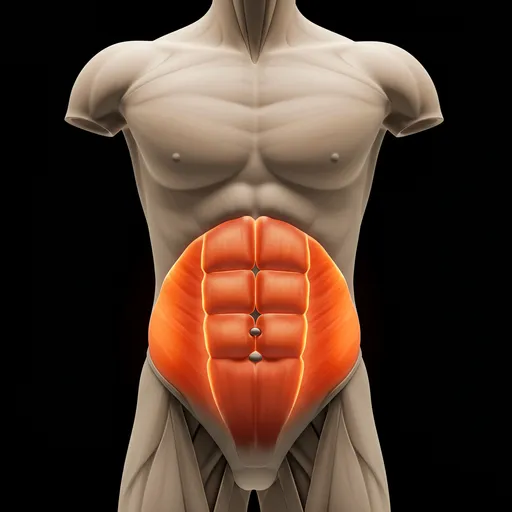
Which muscles does it train?
Abs
Equipment needed
How to perform it
Time under tension matters more than load here: 3 to 4 sets of 8 to 15 reps, or holds of 20 to 60 seconds, with 45 to 90 seconds of rest.
Execution and technique cues
- Lie on your back, lace your fingers loosely behind your head, and lift both shoulder blades slightly off the floor before you begin.
- Draw your right knee toward your chest while extending your left leg out at roughly 45 degrees to the floor.
- Rotate through your thoracic spine to bring your left elbow toward your right knee. The movement comes from the torso, not from pulling the neck forward.
- Alternate sides in a smooth, controlled rhythm, keeping your lower back actively pressed into the floor throughout every rep.
Common mistakes
- Pulling the neck with the hands: Yanking the head forward shifts the load to the cervical spine and reduces rectus abdominis and oblique activation. The hands should support, not pull.
- Moving too fast with momentum: A rushed, bouncing cadence substitutes momentum for muscle work and shortens the effective range of motion on every rep.
- Keeping the extended leg too high: When the straight leg stays nearly vertical, the demand on the core drops significantly. Keep it low enough to maintain tension in the abs.
Frequently asked questions
- What weight should I log for the Bicycle Crunch?
- The Bicycle Crunch is typically performed with bodyweight only. If you are holding an additional weight plate or dumbbell against your chest, log that added load. With no extra load, log 0.
- How does the Bicycle Crunch differ from a standard crunch?
- The Bicycle Crunch adds a rotational component to spinal flexion, which recruits the internal and external obliques more heavily than a standard crunch. The alternating leg drive also increases hip flexor involvement.
Related exercises
Start free and track it
Log this exercise in Ironstead. Free forever for athletes, no auto-renew.
Start free and track itConnect with a coach
Train with a coach? Link up in Ironstead so they write your plans and follow your progress.
Connect with a coachWrite plans as a coach
Build plans with this exercise and assign them to your athletes. 30-day trial.
Write plans as a coach