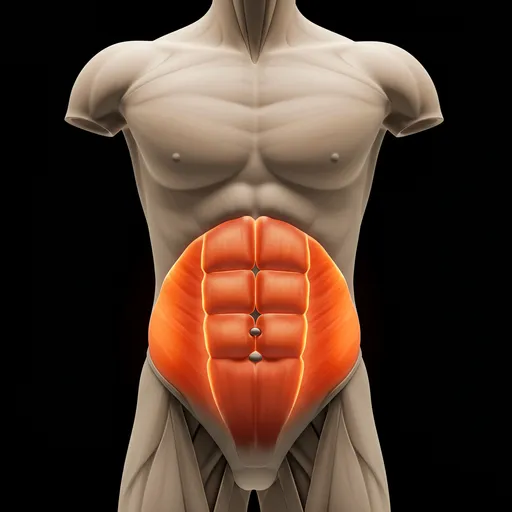
Which muscles does it train?
AbsForearms
Equipment needed
How to perform it
Time under tension matters more than load here: 3 to 4 sets of 8 to 15 reps, or holds of 20 to 60 seconds, with 45 to 90 seconds of rest.
Execution and technique cues
- Mount the captain's chair by placing your forearms on the padded arm rests and gripping the handles firmly. Press your back flat against the back pad and let the legs hang straight down.
- Brace the core and posteriorly tilt the pelvis slightly before you move, ensuring the abs initiate the movement rather than the hip flexors taking over from the start.
- Raise the knees in a controlled arc until the thighs are at least parallel to the floor or higher, keeping the movement smooth and avoiding any swinging or kipping.
- Lower the legs slowly back to the start position, actively resisting gravity on the way down and maintaining core tension throughout. Do not let the legs drop.
Common mistakes
- Swinging or kipping the legs to generate momentum for the knee raise instead of using concentric abdominal contraction, which greatly reduces the stimulus on the abs and loads the lumbar spine.
- Allowing the lower back to pull away from the back pad and arch into extension, which shifts the workload to the hip flexors and compresses the lumbar spine.
- Using a shortened range of motion by barely raising the knees above hip level, which fails to take the abdominal muscles through a meaningful contraction range.
Frequently asked questions
- Does the captain's chair knee raise train the abs or just the hip flexors?
- Both muscle groups are active. The rectus abdominis and obliques stabilise the pelvis and produce trunk flexion, while the hip flexors drive the leg movement. Deliberately posteriorly tilting the pelvis at the start increases abdominal involvement. Using a higher knee path or progressing to straight-leg raises further increases the demand on the abs.
- What is the difference between the knee raise and the leg raise on the captain's chair?
- The knee raise keeps the knees bent, creating a shorter lever arm and making the exercise less mechanically demanding than the straight-leg raise. The leg raise significantly increases the load on the abdominal muscles and is a logical progression once the knee raise can be performed with clean technique and no momentum.
Related exercises
Start free and track it
Log this exercise in Ironstead. Free forever for athletes, no auto-renew.
Start free and track itConnect with a coach
Train with a coach? Link up in Ironstead so they write your plans and follow your progress.
Connect with a coachWrite plans as a coach
Build plans with this exercise and assign them to your athletes. 30-day trial.
Write plans as a coach