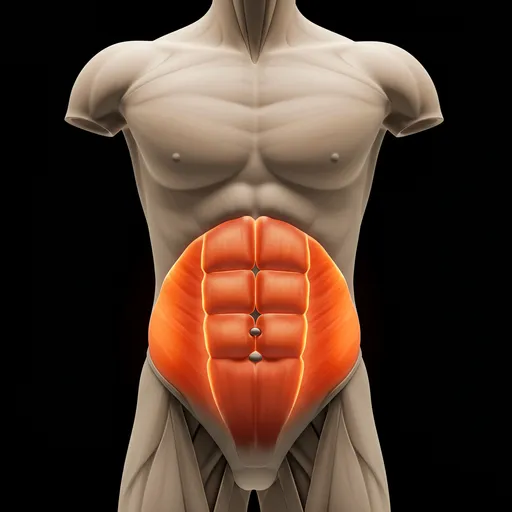
Which muscles does it train?
Abs
Equipment needed
How to perform it
Time under tension matters more than load here: 3 to 4 sets of 8 to 15 reps, or holds of 20 to 60 seconds, with 45 to 90 seconds of rest.
Execution and technique cues
- Lie on your back with feet flat on the floor hip-width apart and hands placed loosely behind the head without interlocking the fingers tightly.
- Gently press the lower back into the floor and engage the abdominals before initiating the movement.
- Lift the upper back by flexing through the thoracic spine, drawing the ribs toward the hips without pulling the head forward with the arms.
- Lower under control until the shoulder blades almost touch the floor and begin the next rep without using momentum.
Common mistakes
- Pulling the head forward with the hands, which stresses the cervical spine and takes tension off the abdominals.
- Lifting the entire back off the floor and turning the crunch into a sit-up, recruiting the hip flexors instead of the rectus abdominis.
- Using momentum and rushing through each rep rather than maintaining muscular tension throughout the full range of motion.
Frequently asked questions
- What is the difference between a crunch and a sit-up?
- In a crunch, only the upper back lifts off the floor to roughly the shoulder blade line while the lower back stays down. In a sit-up, the entire torso rises to an upright position, which also involves the hip flexors to a greater degree.
- Should I add weight to make crunches harder?
- Yes. Holding a weight plate or dumbbell at the chest is a straightforward way to add progressive overload once bodyweight crunches become too easy. Maintain the same controlled technique regardless of added load.
Related exercises
Start free and track it
Log this exercise in Ironstead. Free forever for athletes, no auto-renew.
Start free and track itConnect with a coach
Train with a coach? Link up in Ironstead so they write your plans and follow your progress.
Connect with a coachWrite plans as a coach
Build plans with this exercise and assign them to your athletes. 30-day trial.
Write plans as a coach