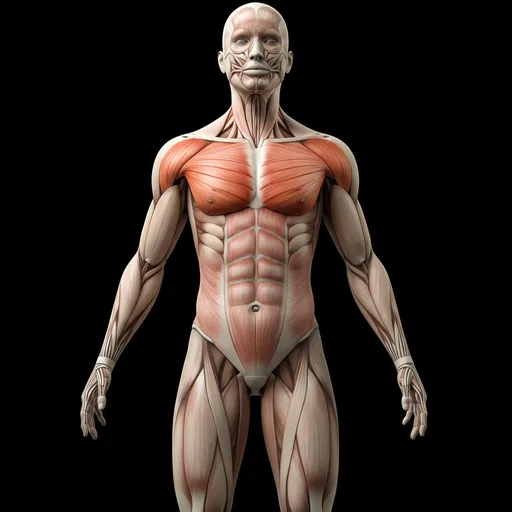
Which muscles does it train?
ChestShouldersTriceps
Equipment needed
How to perform it
For strength, 3 to 5 sets of 3 to 6 reps with 2 to 4 minutes of rest are common. For hypertrophy, use 3 to 4 sets of 6 to 12 reps with 60 to 120 seconds of rest.
Execution and technique cues
- Hook the feet securely under the foot pads of the decline bench set to a 15 to 30 degree decline, then unrack the bar with a grip slightly wider than shoulder-width.
- Pinch the shoulder blades together and drive them into the bench, keep the chest up, and brace the glutes to stay stable on the angled surface.
- Lower the bar under control to the lower portion of the chest, keeping the elbows angled at roughly 45 to 60 degrees from the torso.
- Press the bar explosively back to the start, fully extending the arms at the top without hyperextending the elbows.
Common mistakes
- Lowering the bar too high on the chest, closer to the mid-sternum, which negates the purpose of the decline angle and reduces lower pec emphasis.
- Failing to retract and depress the shoulder blades before pressing, leading to an unstable base and reduced force transfer through the chest.
- Letting the feet come off the pad or the hips rise off the bench to grind through difficult reps, which destabilises the body and increases injury risk.
Frequently asked questions
- What decline angle works best for the decline bench press?
- A decline of 15 to 30 degrees is effective for most people. Steeper angles increase lower pec isolation but also demand more stabilisation from the core and can place greater stress on the shoulders if technique breaks down.
- Does the decline bench press reduce shoulder stress compared to the flat bench press?
- The decline angle typically reduces anterior deltoid involvement and joint stress compared to flat or incline pressing, making it a more comfortable variation for some individuals with anterior shoulder discomfort. Proper scapular positioning is still essential.
Related exercises
Start free and track it
Log this exercise in Ironstead. Free forever for athletes, no auto-renew.
Start free and track itConnect with a coach
Train with a coach? Link up in Ironstead so they write your plans and follow your progress.
Connect with a coachWrite plans as a coach
Build plans with this exercise and assign them to your athletes. 30-day trial.
Write plans as a coach