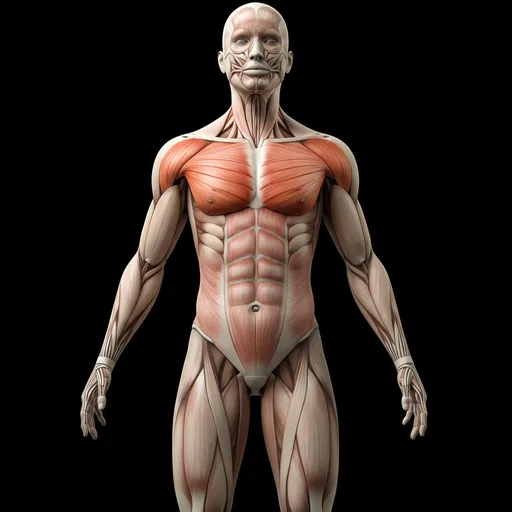
Which muscles does it train?
ChestShouldersTriceps
Equipment needed
How to perform it
For strength, 3 to 5 sets of 3 to 6 reps with 2 to 4 minutes of rest are common. For hypertrophy, use 3 to 4 sets of 6 to 12 reps with 60 to 120 seconds of rest.
Execution and technique cues
- Sit at the high end of the bench set to a 15 to 30 degree decline with the dumbbells resting on the thighs, hook the feet under the pads, then use a knee kick to bring the dumbbells into position as you lie back.
- Retract and depress the shoulder blades into the bench, position the dumbbells at lower chest height, and angle the elbows at roughly 45 to 60 degrees from the torso.
- Press the dumbbells upward and slightly inward so they converge at the top without making contact, squeezing the chest at the peak of the movement.
- Lower the dumbbells in a controlled arc back to the start position, maintaining chest tension throughout the full range of motion.
Common mistakes
- Allowing the elbows to flare excessively wide and drop below 90 degrees, which overloads the shoulder joint and reduces pec engagement at the bottom.
- Banging the dumbbells together forcefully at the top, which adds no training benefit and can strain the wrists and palms.
- Dropping the dumbbells from the chest at the end of a set without a controlled plan for returning to the seated position, which creates a safety risk with heavier loads.
Frequently asked questions
- What advantage does the dumbbell version offer over the barbell decline press?
- Dumbbells allow a greater range of motion, require more stabiliser muscle activation, and permit a more natural wrist rotation. The trade-off is that handling heavy dumbbells safely into and out of position is more technically demanding.
- How do I safely get into position for the decline dumbbell press?
- Sit upright at the top end of the bench with the dumbbells on the thighs, secure the feet under the pads, then use a knee drive to help swing the dumbbells up as you lie back. To exit, lower the dumbbells to the chest and use momentum to sit back up before releasing them.
Related exercises
Start free and track it
Log this exercise in Ironstead. Free forever for athletes, no auto-renew.
Start free and track itConnect with a coach
Train with a coach? Link up in Ironstead so they write your plans and follow your progress.
Connect with a coachWrite plans as a coach
Build plans with this exercise and assign them to your athletes. 30-day trial.
Write plans as a coach