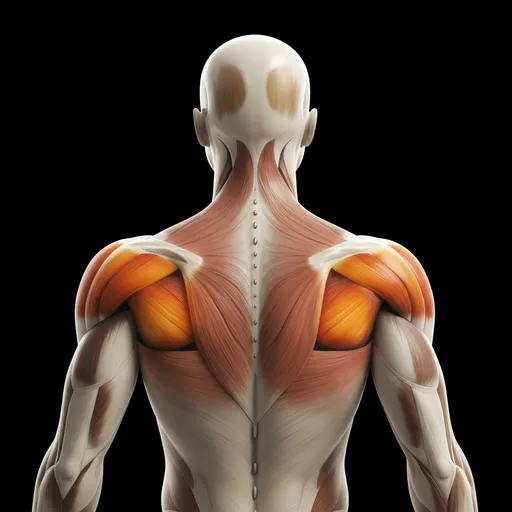
Which muscles does it train?
Shoulders
Equipment needed
How to perform it
Isolation work is usually trained in a higher rep range: 2 to 4 sets of 10 to 15 reps with 45 to 90 seconds of rest, performed under control.
Execution and technique cues
- Stand with feet shoulder-width apart, holding a dumbbell in each hand with a pronated or neutral grip in front of the thighs. Tall spine, core braced.
- Raise both dumbbells (or one at a time) forward in a controlled arc until the arms are parallel to the floor or just above. Keep a slight bend in the elbows throughout.
- Pause briefly at the top and avoid generating momentum with a hip push. Keep the shoulder blades set, not shrugged.
- Lower the dumbbells slowly back to the starting position to take advantage of the eccentric phase.
Common mistakes
- Swinging the torso forward and back to generate momentum, which significantly reduces anterior deltoid activation.
- Raising the arms above 90 degrees without intent. Above the horizontal the upper trapezius increasingly takes over the load.
- Shrugging the shoulders upward during the lift, overloading the upper traps and unloading the target deltoids.
Frequently asked questions
- Should I raise both arms together or one at a time?
- Both work. Bilateral raises increase metabolic demand, while alternating raises allow closer attention to movement quality. Use whichever lets you avoid compensation.
- Pronated or neutral grip?
- A pronated grip (palms facing down) places slightly more emphasis on the anterior deltoid. A neutral grip (thumbs up) can be more comfortable for those with shoulder issues. Both are valid.
Related exercises
Start free and track it
Log this exercise in Ironstead. Free forever for athletes, no auto-renew.
Start free and track itConnect with a coach
Train with a coach? Link up in Ironstead so they write your plans and follow your progress.
Connect with a coachWrite plans as a coach
Build plans with this exercise and assign them to your athletes. 30-day trial.
Write plans as a coach