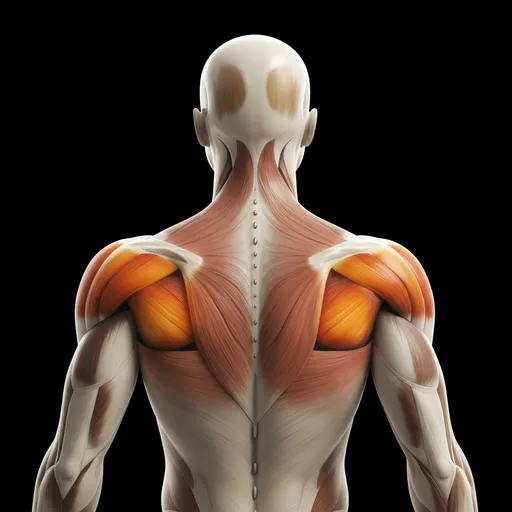
Which muscles does it train?
ShouldersBackGlutesQuadricepsTriceps
Equipment needed
How to perform it
For strength, 3 to 5 sets of 3 to 6 reps with 2 to 3 minutes of rest are common. For hypertrophy, use 3 to 4 sets of 8 to 12 reps with 60 to 120 seconds of rest.
Execution and technique cues
- Set up with feet hip-width apart and a wide snatch grip, keeping your back flat and shoulders slightly over the barbell.
- Push through the floor with your legs to initiate the pull, keeping the bar close to your shins and thighs.
- Shrug the shoulders and pull the elbows high and wide as the bar passes your chest, without dipping under the bar.
- Turn the wrists over aggressively and press the bar to lockout overhead while maintaining completely straight legs.
Common mistakes
- Bending the knees to catch the barbell overhead, which turns the movement into a power snatch.
- Allowing the barbell to loop far away from the body instead of keeping it close to the torso.
- Failing to fully lock out the arms at the top, leaving the bar unstable overhead.
Frequently asked questions
- What is the primary difference between a muscle snatch and a power snatch?
- In a muscle snatch, you do not rebend your knees to catch the bar. Once the legs straighten during the initial pull, they remain locked as you press the bar overhead.
- Why should I include the muscle snatch in my training?
- The muscle snatch is an excellent exercise for building upper body pulling power, developing shoulder and upper back strength, and reinforcing a close bar path.
Related exercises
Start free and track it
Log this exercise in Ironstead. Free forever for athletes, no auto-renew.
Start free and track itConnect with a coach
Train with a coach? Link up in Ironstead so they write your plans and follow your progress.
Connect with a coachWrite plans as a coach
Build plans with this exercise and assign them to your athletes. 30-day trial.
Write plans as a coach