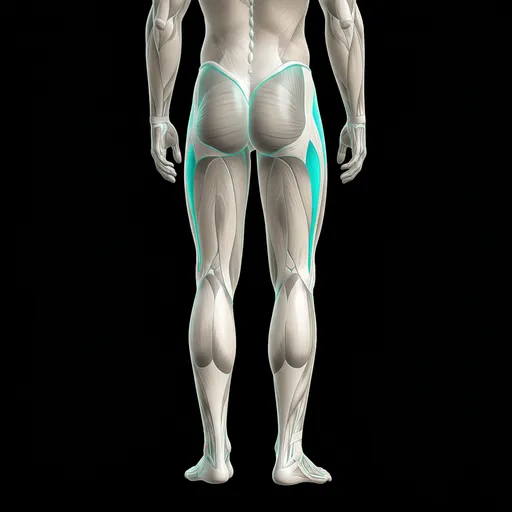
Which muscles does it train?
Hamstrings
Equipment needed
How to perform it
Isolation work is usually trained in a higher rep range: 2 to 4 sets of 10 to 15 reps with 45 to 90 seconds of rest, performed under control.
Execution and technique cues
- Adjust the roller pad to rest just above your ankle and press your hips firmly against the pad.
- Grip the handles securely and support your weight on the non-working leg.
- Curl the roller pad upward toward your glutes by flexing at the knee without moving your hips.
- Squeeze your hamstrings at the top of the movement, then lower the leg slowly back to the start.
Common mistakes
- Pushing the hips backward away from the pad to generate momentum, which reduces hamstring engagement.
- Swinging the weight up too fast and using momentum instead of controlled muscular contraction.
- Allowing the foot to point downward passively, which can cause cramping in the calves.
Frequently asked questions
- Why do I feel the standing leg curl in my calves?
- The gastrocnemius calf muscle crosses the knee joint and assists in knee flexion. Keeping your foot flexed towards the shin can help shift focus to the hamstrings.
- Should I keep my pelvis tucked during the exercise?
- Yes, keeping a neutral pelvis and pressing your hips forward against the pad ensures the hamstrings are worked through their full range of motion.
Related exercises
Start free and track it
Log this exercise in Ironstead. Free forever for athletes, no auto-renew.
Start free and track itConnect with a coach
Train with a coach? Link up in Ironstead so they write your plans and follow your progress.
Connect with a coachWrite plans as a coach
Build plans with this exercise and assign them to your athletes. 30-day trial.
Write plans as a coach