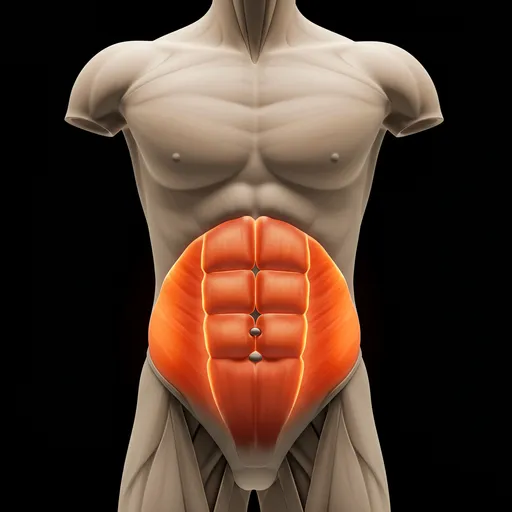
Which muscles does it train?
Abs
Equipment needed
How to perform it
Time under tension matters more than load here: 3 to 4 sets of 8 to 15 reps, or holds of 20 to 60 seconds, with 45 to 90 seconds of rest.
Execution and technique cues
- Lie flat on your back with legs straight, feet together, and arms extended overhead.
- Press your lower back firmly into the floor and contract your core to initiate the movement.
- Fold at the hips, raising your torso and legs simultaneously to meet in a V-position.
- Exhale as you touch your toes, then slowly lower your body back to the starting position under control.
Common mistakes
- Allowing the lower back to arch and lose contact with the floor during the setup and descent.
- Using momentum or swinging the arms to force the body up rather than engaging the abdominal muscles.
- Lifting the legs and torso at completely different times, which breaks the synchronization of the movement.
Frequently asked questions
- How can I scale the V-up if my hamstrings are too tight?
- You can perform the exercise with a slight bend in your knees, focusing on keeping your spine neutral and bringing your chest toward your thighs.
- Is it normal to feel tension in the hip flexors during V-ups?
- Yes, the hip flexors are highly active in this movement, but you should actively focus on initiating and controlling the fold using your lower abdominals.
Related exercises
Start free and track it
Log this exercise in Ironstead. Free forever for athletes, no auto-renew.
Start free and track itConnect with a coach
Train with a coach? Link up in Ironstead so they write your plans and follow your progress.
Connect with a coachWrite plans as a coach
Build plans with this exercise and assign them to your athletes. 30-day trial.
Write plans as a coach