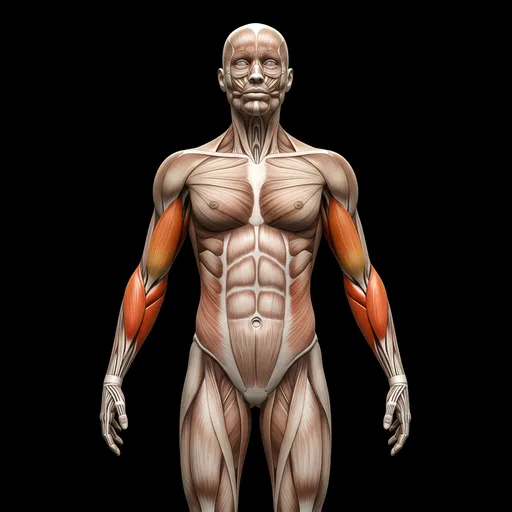
Which muscles does it train?
ForearmsTraps
Equipment needed
How to perform it
For strength, use 3 to 5 heavy carries over 10 to 20 meters with 2 to 3 minutes of rest. For conditioning and volume, use 3 to 4 carries over 30 to 50 meters at a moderate load.
Execution and technique cues
- Stand centered between the two weight columns and grasp the handles firmly using a double overhand grip.
- Set your shoulders down and back, chest up, and establish a solid, shoulder-width stance.
- Hold the handles with your arms fully extended horizontally to your sides, keeping a slight bend in the elbows to protect the joints.
- Maintain a rigid brace throughout your core, glutes, and legs, and resist the inward pull of the weight for the duration of the hold.
Common mistakes
- Letting the shoulders shrug up toward the ears, shifting stress away from the upper back and forearms.
- Allowing the upper back to round and the chest to collapse forward under the weight.
- Locking the elbows out completely under heavy tension, which increases the risk of joint injury.
Frequently asked questions
- What is the primary factor that limits performance in the Hercules hold?
- Grip strength and forearm endurance are almost always the limiting factors in this isometric hold.
- How is the Hercules hold typically simulated in a gym without the official setup?
- It can be simulated using a cable crossover machine with the pulleys set at shoulder height and pulled to a central position.
Related exercises
Start free and track it
Log this exercise in Ironstead. Free forever for athletes, no auto-renew.
Start free and track itConnect with a coach
Train with a coach? Link up in Ironstead so they write your plans and follow your progress.
Connect with a coachWrite plans as a coach
Build plans with this exercise and assign them to your athletes. 30-day trial.
Write plans as a coach