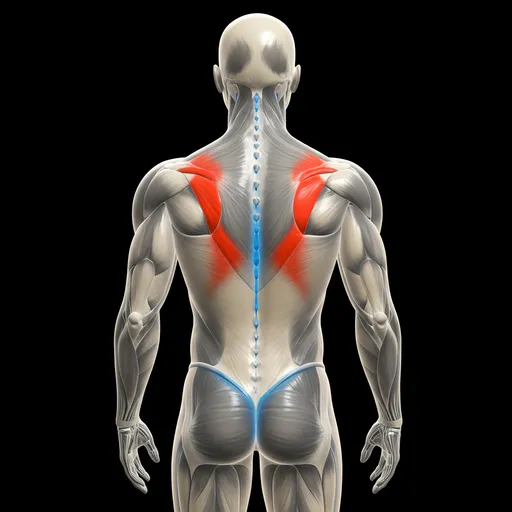
Which muscles does it train?
BackForearmsGlutesTraps
Equipment needed
How to perform it
For strength, use 3 to 5 heavy carries over 10 to 20 meters with 2 to 3 minutes of rest. For conditioning and volume, use 3 to 4 carries over 30 to 50 meters at a moderate load.
Execution and technique cues
- Lap the keg by gripping it low, lift it with a flat back, and pull it tight to your chest.
- Wrap your arms around the keg and squeeze it firmly against your torso to prevent shifting.
- Walk forward using quick, short strides while keeping your hips extended and torso upright.
- Lower the keg back to the floor under control by squatting down with a straight spine.
Common mistakes
- Rounding the upper back and shoulders while carrying the keg.
- Holding the keg too low near the hips instead of high against the chest.
- Taking excessively long strides, which leads to instability and loss of balance.
Frequently asked questions
- What makes the keg carry a unique training tool?
- It forces the body to stabilize an awkward, shifting load, building real-world core, back, and grip strength.
- How should I determine the weight of the keg?
- Start with a partially filled keg that allows you to maintain upright posture for the entire carry duration or distance.
Related exercises
Start free and track it
Log this exercise in Ironstead. Free forever for athletes, no auto-renew.
Start free and track itConnect with a coach
Train with a coach? Link up in Ironstead so they write your plans and follow your progress.
Connect with a coachWrite plans as a coach
Build plans with this exercise and assign them to your athletes. 30-day trial.
Write plans as a coach