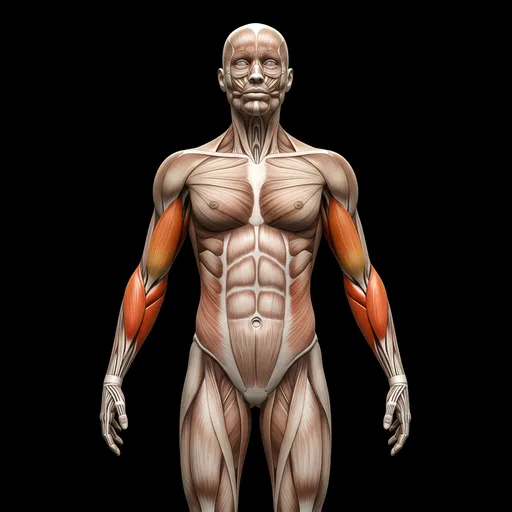
Which muscles does it train?
ForearmsAbsTraps
Equipment needed
How to perform it
For strength, use 3 to 5 heavy carries over 10 to 20 meters with 2 to 3 minutes of rest. For conditioning and volume, use 3 to 4 carries over 30 to 50 meters at a moderate load.
Execution and technique cues
- Stand tall next to the weight, squat down with a straight back, and grip the handle firmly in one hand.
- Stand up by driving through the legs, keeping the spine completely upright and shoulders level.
- Maintain a rigid brace in the core to prevent the torso from leaning toward the weighted side.
- Hold the position for the target duration, then squat down under control to safely place the weight back on the floor.
Common mistakes
- Leaning the torso to the opposite side to offset the weight instead of staying vertical.
- Allowing the shoulder of the loaded arm to shrug up or drop down passively.
- Losing core tension, which leads to hyperextending or twisting the lower back.
Frequently asked questions
- What is the primary benefit of holding the weight on only one side?
- It challenges lateral core stability, forcing the obliques and quadratus lumborum on the opposite side to work harder to keep you upright.
- How heavy should the weight be for this exercise?
- Choose a weight that is challenging to hold for the target duration without losing your upright posture or grip.
Related exercises
Start free and track it
Log this exercise in Ironstead. Free forever for athletes, no auto-renew.
Start free and track itConnect with a coach
Train with a coach? Link up in Ironstead so they write your plans and follow your progress.
Connect with a coachWrite plans as a coach
Build plans with this exercise and assign them to your athletes. 30-day trial.
Write plans as a coach