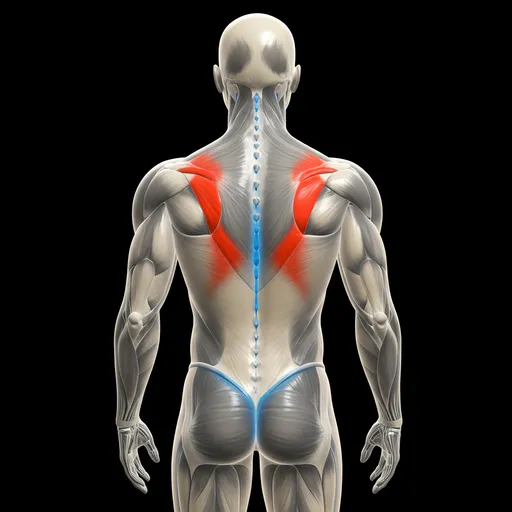
Which muscles does it train?
BackCalvesChestForearmsGlutesHamstringsShouldersTrapsTriceps
Equipment needed
How to perform it
For strength, use 3 to 5 heavy carries over 10 to 20 meters with 2 to 3 minutes of rest. For conditioning and volume, use 3 to 4 carries over 30 to 50 meters at a moderate load.
Execution and technique cues
- Approach the tire, squat down low, and wedge your fingers deep under the tire with a wide stance.
- Press your chest flat against the tire and keep your spine in a neutral position before lifting.
- Drive explosively forward and upward through your legs and hips to lift the tire.
- Transition your hands from a pull to a push at chest height, then drive the tire forward to complete the flip.
Common mistakes
- Lifting with a rounded lower back, which puts excessive stress on the spine.
- Trying to curl the tire with the arms instead of driving the weight with the legs and hips.
- Failing to transition the hands quickly, causing the tire to stall at the chest level.
Frequently asked questions
- How do I choose the right tire weight for training?
- Select a tire that you can flip with explosive power while maintaining proper spinal alignment.
- Is the tire flip a lower body or upper body exercise?
- It is a full-body movement that relies on lower body power for the lift and upper body strength for the transition and push.
Related exercises
Start free and track it
Log this exercise in Ironstead. Free forever for athletes, no auto-renew.
Start free and track itConnect with a coach
Train with a coach? Link up in Ironstead so they write your plans and follow your progress.
Connect with a coachWrite plans as a coach
Build plans with this exercise and assign them to your athletes. 30-day trial.
Write plans as a coach