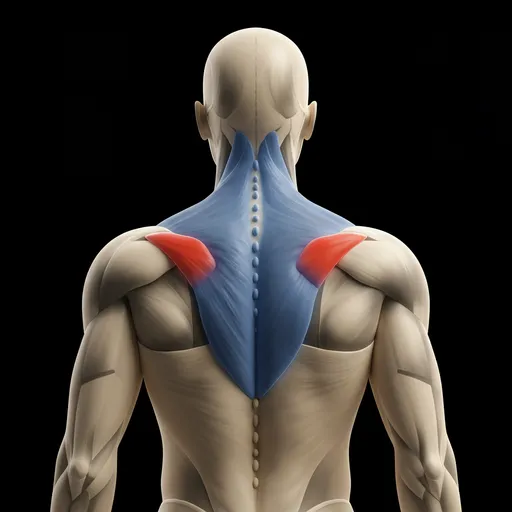
Which muscles does it train?
Traps
Equipment needed
How to perform it
For strength, use 3 to 5 heavy carries over 10 to 20 meters with 2 to 3 minutes of rest. For conditioning and volume, use 3 to 4 carries over 30 to 50 meters at a moderate load.
Execution and technique cues
- Stand inside the trap bar, grip the handles in the center, and lift the bar to a fully upright standing position.
- Let the arms hang straight down with the elbows locked and keep the head in a neutral gaze.
- Shrug the shoulders straight up toward the ears as high as possible without bending the elbows.
- Hold the contraction at the top for a second, then lower the bar slowly back to the starting position.
Common mistakes
- Rolling the shoulders in a circular motion, which adds unnecessary stress to the rotator cuff.
- Bending the elbows to pull the weight up, which shifts the work to the biceps.
- Jutting the head forward during the contraction, which can lead to cervical spine strain.
Frequently asked questions
- Should I use lifting straps for trap bar shrugs?
- Yes, using straps is recommended if your grip fails before your trapezius muscles are fully fatigued.
- What is the advantage of using a trap bar over a barbell for shrugs?
- The trap bar allows a neutral grip at your sides, keeping the shoulders in a more natural position and avoiding thigh contact.
Related exercises
Start free and track it
Log this exercise in Ironstead. Free forever for athletes, no auto-renew.
Start free and track itConnect with a coach
Train with a coach? Link up in Ironstead so they write your plans and follow your progress.
Connect with a coachWrite plans as a coach
Build plans with this exercise and assign them to your athletes. 30-day trial.
Write plans as a coach