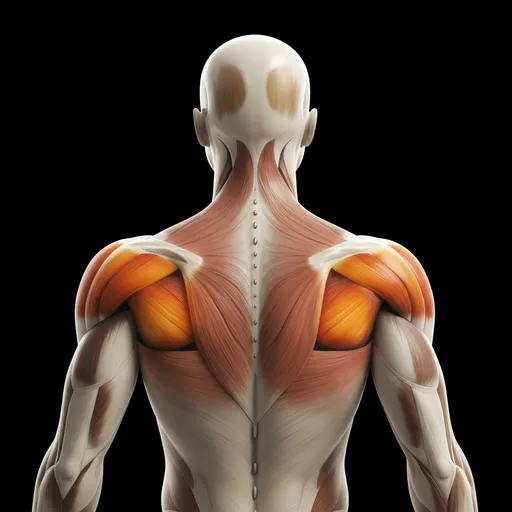
Which muscles does it train?
ShouldersAbsTraps
Equipment needed
How to perform it
For strength, use 3 to 5 heavy carries over 10 to 20 meters with 2 to 3 minutes of rest. For conditioning and volume, use 3 to 4 carries over 30 to 50 meters at a moderate load.
Execution and technique cues
- Hold the implement (dumbbell, kettlebell, or sandbag) with both hands directly in front of the body at shoulder height, elbows slightly bent.
- Retract and depress the shoulder blades, brace the core firmly, and keep the hips neutral without letting the lower back arch.
- Walk forward at a steady, controlled pace. Avoid side-to-side sway and keep the load stable at shoulder level throughout.
- Breathe steadily for the full duration and only set the weight down once the prescribed distance or time is complete.
Common mistakes
- Letting the weight gradually drop below shoulder height as the anterior deltoids fatigue, which removes the intended stimulus.
- Allowing the lower back to hyperextend because the core is not braced, increasing lumbar stress.
- Taking excessively large or fast steps, causing the load to swing and reducing the stabilization demand on the shoulders.
Frequently asked questions
- How heavy should the weight be for a Front Hold Carry?
- Choose a load you can hold at shoulder height for the full distance or time without your hips tilting or your lower back arching. For most people this is 5 to 15 kg to start.
- Can I use a kettlebell instead of a dumbbell?
- Yes. Kettlebells, dumbbells, weight plates, and sandbags all work. The implement shifts the centre of mass slightly, but the execution principles remain the same.
Related exercises
Start free and track it
Log this exercise in Ironstead. Free forever for athletes, no auto-renew.
Start free and track itConnect with a coach
Train with a coach? Link up in Ironstead so they write your plans and follow your progress.
Connect with a coachWrite plans as a coach
Build plans with this exercise and assign them to your athletes. 30-day trial.
Write plans as a coach